Lai Chau Tourism: 10 Majestic Destinations
1. O Quy Ho Pass:
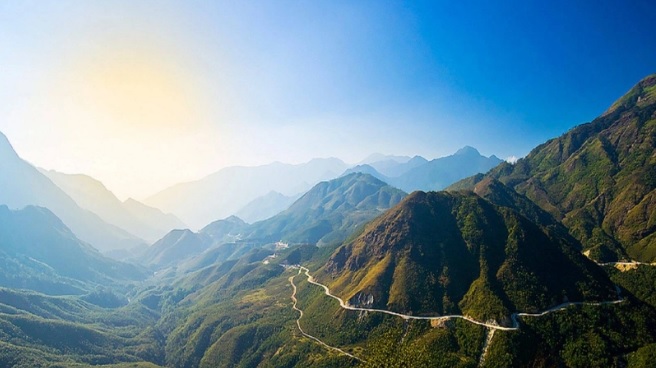
The mountain pass stretches nearly 50km, with two-thirds of the road located in Tam Duong district, Lai Chau province, and the remaining one-third in Sa Pa, Lao Cai province. Just a few kilometers past the entrance to Hoang Lien National Park lies the summit of O Quy Ho Pass, marking the border between the two northern mountainous provinces of Lao Cai and Lai Chau. It winds around the Hoang Lien mountain range, home to the windswept peak of Fansipan, the highest mountain in Indochina, at 3,414m. O Quy Ho Pass has long been famous not only for its strategic location but also for its breathtaking beauty, considered among the most majestic in Northwest Vietnam.
2. Sin Ho Plateau
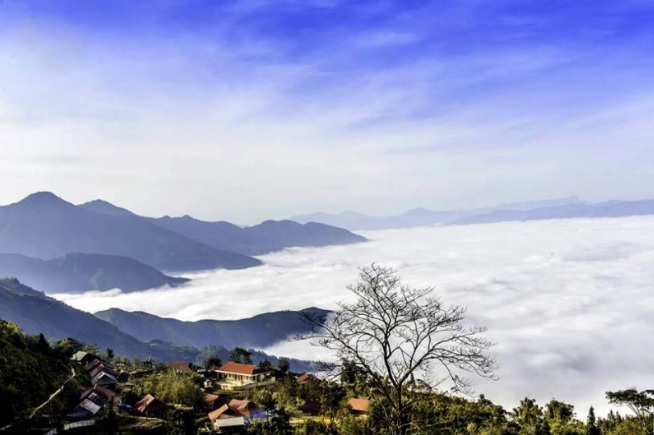
Located approximately 60km from Lai Chau city center, the Sin Ho plateau sits at an altitude of over 1500m. Considered the second Sapa of the Northwest region, the weather here experiences all four seasons in a single day, with an average annual temperature of around 18°C. With its year-round cool climate, the Sin Ho plateau is ideal for the growth of medicinal plants such as: Panax notoginseng, hawthorn, artichoke, medicinal herbs for bathing, and many unique temperate fruits and vegetables like plums, peaches, and pears.
The Sin Ho Plateau lies amidst towering mountains, vast primeval forests, and a sea of mist. Here, you'll find winding terraced rice fields and villages nestled on the mountain slopes…
Visiting the Sin Ho Plateau, tourists will have the opportunity to admire the majestic natural beauty of the mountains and forests, explore the unique customs and traditions of the local people, and especially enjoy dishes with the distinctive flavors of the mountains and forests, such as buffalo meat wrapped in betel leaves, steamed goat, local pork, stream fish, thang co (a traditional stew), and sticky rice…
3. Tan Uyen Tea Hill
Stretching along National Highway 32, the tea plantations, some 40-50 years old and covering nearly 2000 hectares, are located not far from the center of Tan Uyen town. Tan Uyen tea hills are now a favorite destination for many visitors to Tan Uyen.
Here, you can enjoy the scenery and fresh air. It's also a popular spot for wedding photos or romantic photoshoots amidst the lush green tea fields, bathed in golden sunlight. Tea is also one of the town's main economic crops, with famous tea products such as San Tuyet, Oolong, and Thanh Tam teas known throughout the country.
4. White Wood Luong Tu
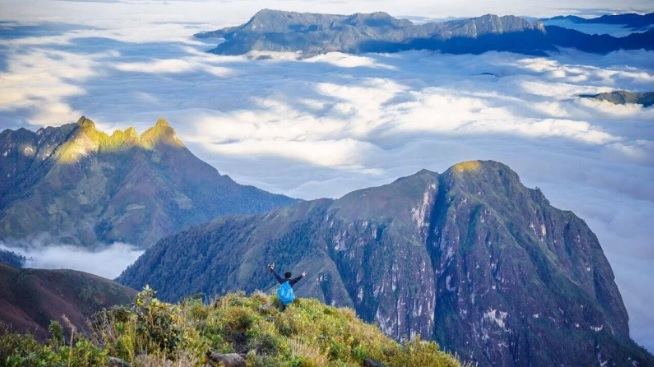
Bach Moc Luong Tu peak is located in Sin Sui Ho commune. At 3,045m above sea level, Bach Moc Luong Tu is one of the five highest mountains in Vietnam and Southeast Asia, situated in Lai Chau province. Conquering Bach Moc Luong Tu is always a challenge but also incredibly attractive for trekkers. While not the highest peak, Bach Moc Luong Tu is known for having the most beautiful scenery and the most interesting exploration route.
5. Pu Si Lung Peak
As one of the most pristine, mysterious, and captivating mountains in Vietnam, the legendary Pu Si Lung peak, located on the border between Vietnam and China in Pa Ve Su commune, Muong Te district, Lai Chau province, with an altitude of 3083m, is known as the "roof of the border" and is always a dream destination for adventurous travelers.
6. Muong Te Nature Reserve
The Muong Te Nature Reserve, located in the communes of Ta Tong and Mu Ca, boasts an incredibly rich and diverse flora and vegetation, especially its forest ecosystem. Surveys conducted by Muong Te district reveal 542 plant species, including 57 rare species listed in the Vietnamese Red Book and 7 in the World Red Book, mostly rare medicinal plants; 22 species endemic to the Northwest region, 7 species listed in Government Decree No. 32, and 6 species characteristic of the Northwest region: Black Trám (Acacia mangium), Chò nước (Syzygium jambos), Giổi xương (Acacia mangium), Chò nâu (Acacia auriculiformis), Đinh (Dalbergia tonkinensis), Sến (Dalbergia tonkinensis), and Lát hoa (Dalbergia tonkinensis).
7. Pu Ta Leng Peak
Located about 20 km northeast of Lai Chau city, Pu Ta Leng has an altitude of 3049 m. If Fansipan is considered the "roof of Indochina," then Pu Ta Leng is the second highest peak that adventurous travelers and young people who love challenges want to conquer at least once. Every year, from October to March is the best time for tourists to conquer Pu Ta Leng peak because of the beauty of nature and the various wildflowers, especially the rhododendrons blooming profusely from the slopes to the summit.
To conquer Pu Ta Leng peak, visitors will have to pass through primeval forests, waterfalls, streams, and rich vegetation… and upon reaching the summit, they will see oases hidden amidst a sea of clouds at an altitude of 3049m.
Layers of white clouds against the blue sky and green mountains create a magnificent picture. Along with Pu Ta Leng, Lai Chau also boasts five other peaks in the Top 10 highest mountains in Vietnam. In order, they are Pu Si Lung (3,083m), Pu Ta Leng (3,049m), Bach Moc Luong Tu (3,045m), Khang Su Van (3,012m), Ta Lien (2,993m), and Bach Moc Luong (2,976m).
8. Muong Than field
Muong Than is one of the four largest rice fields in the Northwest region, located in Muong Than commune, Than Uyen district. This vast field not only creates a picturesque landscape amidst majestic mountains and forests but also produces many famous local products such as baby corn, Hoang Long sweet potatoes, Sen Cu rice, and Tam rice.
9. Quần thể hang động Pu Sam Cáp
Cách thành phố Lai Châu khoảng 6km, bên tỉnh lộ 129 nối thành phố Lai Châu với huyện Sìn Hồ, quần thể hang động Pu Sam Cap được ví là “Tây Bắc đệ nhất động”. Hiện Pu Sam Cap có hai động đang đón khách du lịch là động Thiên Môn và động Thiên Đường với nhiều nhũ đá kỳ ảo, huyền bí, ẩn chứa nhiều câu chuyện cảm động của con người miền núi. Pu Sam Cap luôn là lời mời gọi hấp dẫn đối với mọi du khách gần xa.
10. Sì Thâu Chải
Nằm cách trung tâm thị trấn Tam Đường 6km Bản Sì Thâu Chải hiện ra thật thơ mộng, một bản nhỏ của người Dao với trên 60 hộ dân sinh sống, vào những ngày trời nhiều mây, du khách có thể hòa mình cùng những đám mây trôi lơ lửng. Bản Sì Thâu Chải hiện ra thật thơ mộng đắm say mà khó quên. Đến Sì Thâu Chải để trải nghiệm đời sống sinh hoạt, sản xuất, thưởng thức ẩm thực dân tộc, tham gia trò chơi dân gian...
6 local specialties you should try when traveling to Lai Chau.
- "Pig carried under the arm": This breed of pig is a specialty of the Northwest highlands. These pigs are raised free-range in the forest by ethnic minority communities, foraging for food, so each pig weighs only about 10-15 kg. Because they eat various leaves and herbs in the forest, their meat is very firm and flavorful. "Pig carried under the arm" is prepared in many delicious ways such as steamed, grilled, stewed, braised, and in soup… Each dish is marinated and cooked with various leaves and seeds that reflect the flavors of the mountains and forests, offering a unique and special taste experience for first-time visitors.
- "Goby fish cooked in ash": If you have the opportunity to visit Phong Tho district, don't miss the "goby fish cooked in ash" – a specialty of the Thai ethnic minority. Goby fish are readily available in rivers and streams. After being caught, they are cleaned and marinated with finely chopped spices such as lemongrass, chili, ginger, pepper, mắc khén (a type of wild pepper), mint, and other herbs. After marinating for about 15-30 minutes, the fish are wrapped in banana leaves and buried in hot ash, flipped over every 30 minutes, and repeated several times until cooked.
- Pa Pỉnh Tộp: Pa Pỉnh Tộp (grilled folded fish) is a rather elaborate dish, often served when the family has honored guests. Fresh, whole carp are selected for grilling. After rubbing the fish with a little salt and dried chili powder to remove the fishy smell, the cook marinates it with finely chopped herbs such as mắc khén (a type of wild pepper), ginger, garlic, lemongrass, onion, wild herbs, chili powder, etc., mixed together and rubbed evenly over the fish, and also stuffed into its belly.
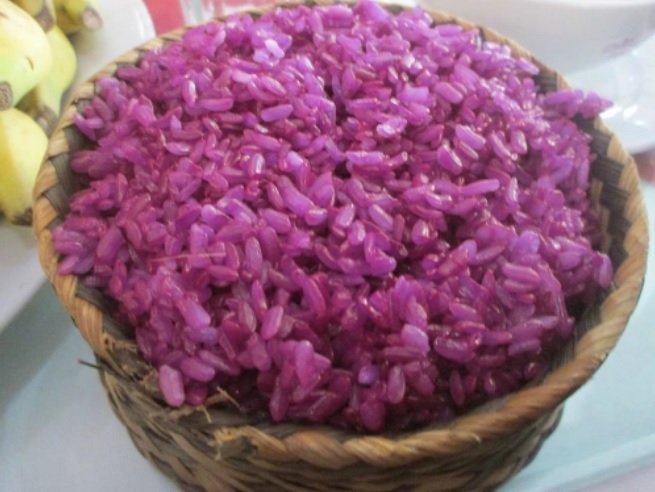
- Purple sticky rice: A traditional dish of the ethnic minorities in the highlands of Lai Chau, purple sticky rice showcases the skillful hands of the women in its preparation. The glutinous rice is soaked for 6-8 hours before steaming. The distinctive and attractive purple color of the sticky rice is dyed using a plant called "khau cam" (a type of forest leaf).
- Grilled rock moss: Rock moss is a clean vegetable of the people of Lai Chau. They put a lot of effort into collecting it from rocks by the stream to prepare delicious dishes for their families, such as soup, grilled, or stir-fried. When preparing the moss, they scoop it into a basket, rinse it with clean water to remove sand and dirt, place it on a large rock or cutting board, and then use a large piece of wood to pound it. This process is repeated several times before it can be cooked.
- Fern salad: Ferns grow everywhere in home gardens, pond banks, and stream banks, so they are often present in the daily meals of the Thai people in Lai Chau. The method for making this dish is quite simple: select young shoots, wash them thoroughly, dry them in the sun, then steam them until cooked. Afterwards, mix them well with herbs, chili peppers, ginger, garlic, MSG, salt, and add a squeeze of fresh lemon juice.